
Satisfies 1 requirement
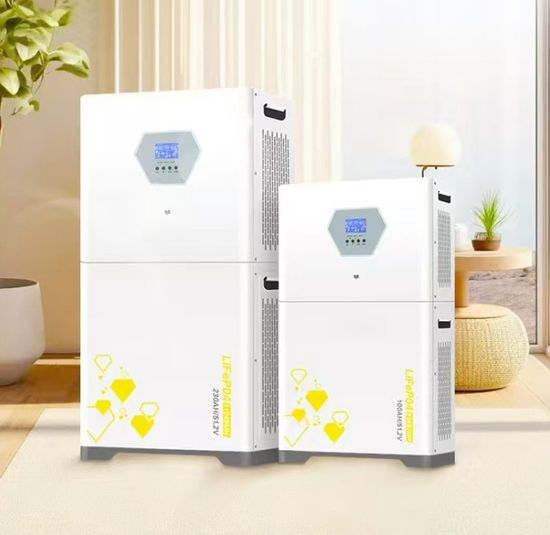
5kw-25kw Solar Energy Storage System with LiFePO4 Battery by Hy Tech
US$505.00-520.00
20 Sets(MOQ)

I have found results from80000+products and20000+suppliers aboutBatteries for solar system 5kw




For a 5kW solar system, Lithium Iron Phosphate (LiFePO4) is the industry standard due to its high safety profile, long cycle life (typically 6,000+ cycles), and high depth of discharge (DoD) of up to 90-95%. While Lead-Acid or Gel batteries are cheaper upfront, they have a shorter lifespan and lower efficiency. You should prioritize LiFePO4 for better long-term ROI and thermal stability.
You must ensure the nominal voltage (usually 48V or 51.2V for 5kW systems) matches your inverter's input requirements. Check the Maximum Continuous Discharge Current; for a 5kW load, the battery must support at least 100A to 125A to prevent tripping. Additionally, verify BMS (Battery Management System) communication compatibility (RS485/CAN bus) to ensure the battery and inverter can synchronize data.
Safety is paramount for energy storage. Ensure the supplier provides UN38.3 (for safe transport), IEC 62619 (safety requirements for large scale lithium batteries), and UL 1973 or CE (EN 61000) for regional market access. For the North American market, UL 9540A is increasingly required to prove fire safety in residential installations.
Calculate the Levelized Cost of Storage (LCOS) rather than just the purchase price. A battery with a 10-year warranty and 6,000 cycles at 80% capacity retention offers much better value than a low-cost alternative that fails after 2,000 cycles. Always request a Cycle Life vs. Depth of Discharge (DoD) curve from the manufacturer.
Lithium batteries are classified as Class 9 Dangerous Goods. The main risks include customs seizure due to improper labeling and fire hazards during transit. You must ensure the supplier provides a Material Safety Data Sheet (MSDS) and a Dangerous Goods Declaration. Using a freight forwarder experienced in DG (Dangerous Goods) shipping is non-negotiable.
Utilize secure payment escrow services provided by reputable platforms like Made-in-China.com to protect your funds until delivery. For quality assurance, hire a third-party inspection agency (like SGS or Intertek) to perform a Pre-Shipment Inspection (PSI), specifically testing the actual capacity (Ah) and internal resistance of the cells.
Focus on Tier 1 cell brands (e.g., EVE, CATL, or BYD) used inside the battery pack. Negotiate based on volume-tiered pricing and ask for spare BMS boards or fuses (1-2% of order value) to be included for easy local repairs. Clarify the After-Sales Warranty Procedure: will they ship replacement parts or provide a full unit refund if the failure rate exceeds a certain threshold?
Due to the heavy weight and 'Dangerous Goods' status, Sea Freight (LCL or FCL) is the most economical method. For 5kW systems (which usually weigh 45kg-90kg per unit), DDP (Delivered Duty Paid) sea shipping is popular for small-to-medium buyers as it includes customs clearance and 'last-mile' delivery, though FOB is better for large-scale buyers who want full control over logistics costs.