
Satisfies 1 requirement
Architectural Decorative Spiral Wires Conveyor Belt Mesh
US$15.00
1 Square Meter(MOQ)

I have found results from100000+products and30000+suppliers aboutConveyor belt mesh


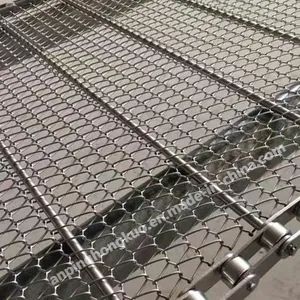


Selecting the correct material is critical for longevity. For food processing, prioritize 304 or 316 grade Stainless Steel to ensure corrosion resistance and hygiene compliance. For high-temperature industrial kilns or furnaces, look for specialized alloys like Inconel or 314 Stainless Steel which can withstand temperatures exceeding 1000°C. If the environment involves chemical exposure or pickling, 316L Stainless Steel is preferred due to its superior resistance to pitting and acids.
Buyers must confirm the Wire Diameter, Mesh Pitch (aperture size), and Overall Width/Length. For heavy-duty applications, verify the Rod Diameter and Spiral Pitch to ensure the belt can handle the required tensile load. Always request a Material Test Report (MTR) to verify the chemical composition of the metal, ensuring it meets international standards like ASTM or DIN.
The edge finish determines the belt's stability. Welded Edges are the most common and cost-effective for general use. Knuckled (Clinched) Edges are ideal for applications where the belt needs more flexibility or where welding might cause heat-affected zone brittleness. For heavy-duty power transmission, Chain Link Edges (using roller chains) are essential to ensure positive drive and prevent tracking issues under high torque.
If the mesh is used in food production, it must be FDA or EC 1935/2004 compliant. Ensure the supplier provides a Food Grade Certification. The surface finish should be electropolished or passivated to remove impurities and create a smooth, easy-to-clean surface that prevents bacterial growth.
The biggest risk is material substitution, where a supplier might use a lower grade of stainless steel (e.g., 201 instead of 304). To mitigate this, use third-party inspection services (like SGS or Intertek) to perform a PMI (Positive Material Identification) test before the balance payment is made. Another risk is dimensional inaccuracy, which can lead to the belt not fitting the conveyor frame; always require a pre-shipment video inspection of the belt being measured.
Focus on Total Cost of Ownership (TCO) rather than just the unit price. Negotiate for spare parts (like extra joining pins or spiral wires) to be included in the price. For orders exceeding 500 meters, aim for a 10-15% volume discount. Ask the supplier if they can provide customized packaging (wooden crates with moisture-proof lining) at no extra cost to prevent damage during sea freight.
Conveyor mesh is heavy and prone to deformation if stacked incorrectly. Insist on fumigated wooden cases with internal steel core supports for rolled mesh to prevent flattening. For international trade, FOB (Free On Board) is recommended if you have a reliable freight forwarder, as it gives you more control over the shipping costs and transit times compared to CIF.
Always conduct transactions through secured payment channels provided by reputable platforms like Made-in-China.com. Utilize Trade Assurance or similar escrow services to ensure your funds are protected until the goods are verified. Avoid direct wire transfers to private accounts; always ensure the beneficiary name matches the company name on the proforma invoice.