

Outdoor ups
I have found results from200000+products and100000+suppliers aboutOutdoor ups
Commonly Used:
US$
—
Customization Available
Sample Available
Manufacturer First
Product Attributes:
Type: Line Interactive
Type: On-line
Type: Standby
Type: Lithium-Ion Batteries
Phase: Single Phase
Protection: Overvoltage
Application: Communication
Classification: Lighting/Power
Standby Time: Long-acting Machine
Square Wave Output UPS
Output Capacity: Small Type
Equipment Mode: Decentralized
Number of Cells: 36pcs
Condition: New
Certification: CE
Material: Monocrystalline Silicon
Usage: Car
Nominal Voltage: 12V
High Discharge Rate
Shape: Square Battery
Electrolyte: Li-ion
Installation: Fixed
Rechargeable: Chargeable
AC Three Phase
System: Off-Grid system
Power: 101W-5kW
Standard: Standard
Phase: Three Phase
Protection: Short Circuit
Protection: Overcurrent
Application: Industry
Application: Fire Safety
Application: Spaceflight
Standby Time: Standard Machine
Sine Wave Output UPS
Output Capacity: Large Type
Output Capacity: Medium Type
Output Capacity: Minitype
Equipment Mode: Centralized Model
Certification: ISO
Certification: RoHS
Usage: Bus
Usage: UPS
Usage: Electric Power
Usage: Lighting
Usage: Electric Bicycle

Satisfies 1 requirement
Allpowers Outdoor Emergency Power Supply Lithium Iron Phosphate 300W Mobile UPS
US$120.00-145.00
10 Sets(MOQ)

Satisfies 1 requirement
Factory Price Hot Selling Single Phase with Ground 220VAC High Frequency Online Outdoor UPS
US$460.00-527.00
1 Piece(MOQ)

Satisfies 1 requirement
1K 10kVA Outdoor Online UPS with Flexible Network Monitoring for Remote Roads Mountains Bad Environment
US$612.00-625.00
1 Piece(MOQ)

Satisfies 1 requirement
1kVA Customized Outdoor UPS System Compact UPS Solution for Outdoor Power Protection
US$6,800.00
1 Piece(MOQ)

Satisfies 1 requirement
Everexceed 6kVA Outdoor UPS Designed for Harsh Environments with Stable UPS Power Supply
US$1,500.00
1 Piece(MOQ)

Satisfies 1 requirement
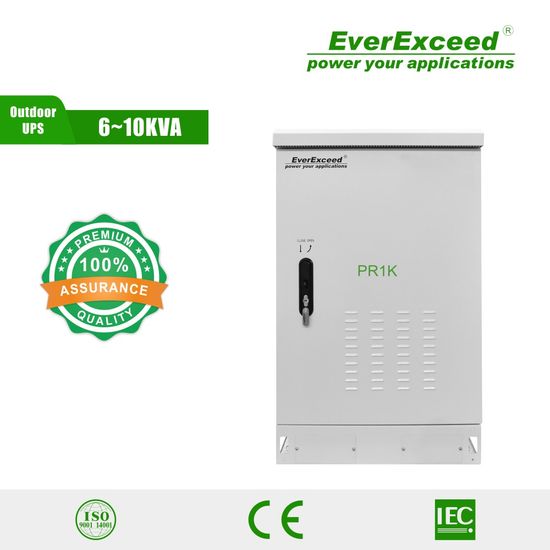
High-Performance 1-10kVA Outdoor UPS for All Weather Conditions
US$25,000.00-30,000.00
1 Piece(MOQ)
Satisfies 1 requirement
Outdoor UPS 1kVA for Remote Sites Industrial UPS Power Supply System
US$1,500.00
1 Piece(MOQ)

Satisfies 1 requirement
Everexceed 2kVA Pure Sine Wave Outdoor UPS - Tailored for Your Application
US$1,500.00
1 Piece(MOQ)

Satisfies 1 requirement
Most Popular 60W 20V ETFE Portable Foldable Solar Electric Panel for Outdoor Camping Energy Storage System UPS
US$53.15-54.98
500 Pieces(MOQ)

Satisfies 1 requirement
Home UPS LiFePO4 Battery 110V 1500W Emergency Outdoor Solar Charging Banks Portable Power Station 2000 Watt Inverter Generator
US$1,001.10-1,057.80
10 Pieces(MOQ)

Satisfies 1 requirement
Smart 2200W 110V~240V Solar Energy Systems Home UPS Mini Solar Generator Supply Portable Camping 2016wh Outdoor Power Station
US$1,001.10-1,057.80
10 Pieces(MOQ)

Satisfies 1 requirement
650va Office Computer Backup UPS with CE Certification for Outdoor Picnic
US$23.86-32.55
1 Piece(MOQ)

Satisfies 1 requirement
240W-400W Portable Power Station Outdoor Online UPS Uninterrupted Power Supply with Battery Backup
US$38.98
1 Piece(MOQ)

Satisfies 1 requirement
Portable Power Station 2400W 2016wh LiFePO4 Battery with MPPT Controller UPS 400W Solar Panel for Car & RV Outdoor
US$739.00-829.00
1 Piece(MOQ)

Satisfies 1 requirement
1kVA to 10kVA High Frequency Pure Sine Wave Power Supply Outdoor UPS
US$599.00-1,399.00
1 Piece(MOQ)


Satisfies 1 requirement
ISO CE RoHS Approved 15years Manufacturer IP65 10kVA Outdoor Online UPS
US$169.00
5 Pieces(MOQ)

Satisfies 1 requirement
IP65 High Reliability 1kVA 2kVA 3kVA 6kVA 10kVA Outdoor Online UPS
US$599.00-1,399.00
1 Piece(MOQ)

Satisfies 1 requirement
Outdoor Online UPS for High Temperature Resistant Anti-Cold 1kVA-10kVA with IP65
US$596.00-1,390.00
1 Piece(MOQ)

Satisfies 1 requirement
High Frequency Online Outdoor UPS with RS232 Intelligent Communication Monitoring
US$1,240.00
5 Pieces(MOQ)

Satisfies 1 requirement
Used for Telecom 1kVA 2kVA 3kVA 6kVA 10kVA Integrated Outdoor Online UPS
US$869.00
5 Pieces(MOQ)

Satisfies 1 requirement
ISO CE RoHS Approval Integrated 110V 220V High Frequency Outdoor UPS Power Supply
US$869.00
5 Pieces(MOQ)

Satisfies 1 requirement
High Quality Factory Price 1kVA 2kVA 3kVA 6kVA 10kVA Outdoor Online UPS Power Supply
US$1,025.00
5 Pieces(MOQ)

Satisfies 1 requirement
CE IP65 Single Phase 1kVA 2kVA 3kVA 6kVA 10kVA Outdoor Online UPS
US$500.00
5 Pieces(MOQ)

Satisfies 1 requirement
Customized Outdoor UPS 1kVA 2kVA 3kVA 6kVA 10kVA Outdoor UPS for Communication Network Traffic Control System
US$500.00
5 Pieces(MOQ)

Satisfies 1 requirement
IP65 10kVA Ground Mounted Power System Outdoor Online UPS
US$500.00
5 Pieces(MOQ)

Satisfies 1 requirement
230V 120V Outdoor Battery Backup High Temperature UPS Industrial UPS Battery Backup
US$565.00-590.00
1 Piece(MOQ)

Satisfies 1 requirement
New Design Factory Price CE RoHS MSDS Us Japan Popular LED LCD Display 1000W 110V/220V Fast Charge Outdoor Portable Power Station UPS
US$280.00-330.00
10 Pieces(MOQ)

Satisfies 1 requirement
Customized UPS IP65 Outdoor Enclosures UPS 3kVA 6kVA Waterproof Uninterruptible Power Supply Weatherproof UPS up to 10 Days Backup Time
US$399.00
5 Pieces(MOQ)
Sourcing guidance for Outdoor Ups
What are the key technical specifications to consider when selecting an Outdoor UPS?
When sourcing an Outdoor UPS, the most critical factor is the IP Rating (Ingress Protection); look for at least IP55 or IP65 to ensure protection against dust and water. Additionally, evaluate the Battery Chemistry, prioritizing LiFePO4 (Lithium Iron Phosphate) for its superior thermal stability and longer cycle life (typically 2000+ cycles) compared to lead-acid. Ensure the unit supports a Wide Temperature Range (-20°C to +50°C) to maintain performance in extreme environments.
How do I ensure the Outdoor UPS meets international safety and quality standards?
Verify that the supplier provides CE, RoHS, and FCC certifications for global market access. For the North American market, UL 1778 (UPS equipment) or UL 50E (Enclosures for Electrical Equipment) is essential. Always request UN38.3 and MSDS reports for the lithium batteries to ensure they are safe for international transport and comply with hazardous goods regulations.
What functional features are necessary for remote outdoor power management?
Prioritize units equipped with SNMP (Simple Network Management Protocol) or RS485/RS232 communication ports for remote monitoring of battery health and load status. Look for Automatic Voltage Regulation (AVR) to protect sensitive equipment from power surges and brownouts, and ensure the unit has an Intelligent Cooling System (heatsinks or temperature-controlled fans) to prevent overheating in direct sunlight.
How can I optimize the cost-efficiency of my Outdoor UPS procurement?
Calculate the Total Cost of Ownership (TCO) rather than just the initial purchase price; a higher-priced LiFePO4 system often yields better ROI due to lower maintenance and replacement costs over 5-10 years. Negotiate tiered pricing for bulk orders, where discounts of 10-20% are common for quantities exceeding 50 units. On Made-in-China.com, look for 'Diamond Members' or 'Audited Suppliers' to reduce the risk of quality-related financial losses.
Cross-Border Purchasing Considerations for Outdoor UPS
What are the primary risks when shipping Outdoor UPS internationally?
The primary risk involves Lithium Battery Regulations. UPS systems containing large lithium batteries are classified as Class 9 Dangerous Goods. You must ensure the supplier uses specialized DG (Dangerous Goods) packaging and works with freight forwarders certified to handle UN3480/UN3481 shipments to avoid customs seizures or heavy fines.
How should I negotiate quality assurance with Chinese suppliers?
Request a Pre-Shipment Inspection (PSI) by a third party like SGS or Intertek. Define a clear Warranty Policy (minimum 2-3 years) in the contract, specifying that the supplier covers the cost of replacement parts or units if the failure rate exceeds a certain threshold (e.g., >1%). Use Secure Payment Terms such as LC (Letter of Credit) or escrow services provided by Made-in-China.com to protect your funds until the goods pass inspection.
What logistics strategy is best for heavy power equipment?
Due to the high weight of lead-acid batteries or the high value of lithium systems, Sea Freight (LCL or FCL) is the most economical method. For urgent projects, Air Freight is possible but extremely expensive for batteries. Ensure the Incoterms are clearly defined; FOB (Free On Board) is recommended as it gives you more control over the shipping costs and the selection of a reliable logistics provider.
How do I verify the authenticity of a supplier's factory capabilities?
Check for ISO 9001 (Quality Management) and ISO 14001 (Environmental Management) certifications. On Made-in-China.com, review the Audit Reports which provide verified data on production lines, R&D capacity, and export history. Requesting a live video factory tour or a customized sample with your logo can also help verify that you are dealing with a manufacturer rather than a small trading company.