
Satisfies 1 requirement
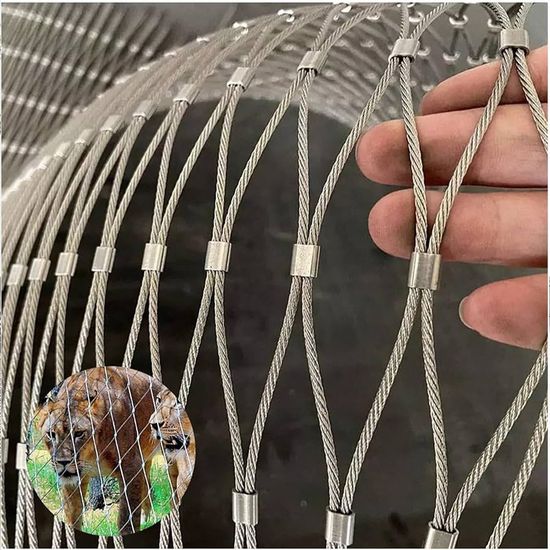
Custom 304/316/316L Stainless Steel Cable Rope Mesh Panel with 60*60mm and 80*80mm Openings for Architectural Railing, Safety Protection and Vertical Green Wall
US$8.00-55.00
50 Square Meters(MOQ)

I have found results from200000+products and70000+suppliers aboutSafety mesh


When sourcing safety mesh, you must prioritize material composition and tensile strength. For construction or industrial use, look for High-Density Polyethylene (HDPE) with UV stabilizers to ensure longevity under sun exposure. The mesh size (aperture) should be selected based on the application; for example, debris netting requires a finer mesh (e.g., 1mm to 5mm) compared to perimeter safety fencing. Ensure the weight per square meter (GSM) aligns with your durability needs, typically ranging from 60g/m² to 300g/m².
Compliance is non-negotiable for safety products. For the European market, ensure the product meets EN 1263-1 (Safety nets - Part 1: Safety requirements, test methods). For the US market, verify compliance with OSHA 1926.502 regulations and ANSI A10.11 standards. Additionally, look for ISO 9001 certification from the manufacturer to guarantee consistent quality management and Flame Retardant certifications (such as NFPA 701 or BS 5867) if the mesh is used in high-risk fire zones.
The choice depends heavily on the environment. Construction Safety Mesh (often orange) is designed for high visibility and site cordoning. Debris Netting is used vertically on scaffolding to prevent falling objects, requiring reinforced edges and eyelets. For Fall Arrest Systems, the mesh must be high-tenacity knotted or knotless nylon with a certified energy absorption capacity. Always confirm the load-bearing capacity with the supplier if the mesh is intended to support human weight.
To optimize your investment, evaluate the UV resistance rating; a mesh that lasts 3-5 years outdoors is more cost-effective than a cheaper version that degrades in 6 months. Request third-party lab reports for weather resistance and burst strength. For large-scale projects, sourcing from Made-in-China.com allows you to access factory-direct pricing, which can reduce costs by 20-40% compared to local distributors, especially when ordering in Full Container Loads (FCL).
The primary risk is material substitution, where a supplier might use recycled plastic instead of virgin HDPE, leading to premature brittleness. To mitigate this, use Trade Assurance services on Made-in-China.com and mandate a Pre-Shipment Inspection (PSI) by agencies like SGS or Intertek to verify the tensile strength and UV coating before the balance payment is made.
Focus on Total Landed Cost rather than just the unit price. Negotiate for customized roll lengths to reduce on-site waste, and request free samples to test the hand-feel and mesh integrity. For long-term partnerships, ask for tiered pricing where the discount increases by 5-10% as your annual volume grows. Ensure the Incoterms (e.g., FOB or CIF) are clearly defined in the Proforma Invoice.
Safety mesh is relatively lightweight but bulky. To save on shipping costs, request vacuum compression packaging or high-density rolling to maximize container utilization. Ensure each roll is wrapped in waterproof PE film to prevent moisture damage during sea transit. For shipping to the US or Europe, verify that the supplier provides a Certificate of Origin to potentially benefit from preferential tariff rates.
Always conduct transactions through secure payment channels provided by reputable platforms like Made-in-China.com to protect against fraud. Stay updated on Anti-Dumping Duties (ADD); some regions impose specific tariffs on plastic mesh products from certain origins. Ask the supplier for their Business License and Export Qualification to ensure they are a legitimate entity capable of handling international trade documentation.