
Satisfies 1 requirement
Stainless Steel Work Table Workbench for Kitchen Equipment Catering Equipment Kitchen Supplies Kitchenware
US$64.90
20 Pieces(MOQ)

I have found results from100000+products and90000+suppliers aboutStainless kitchenware


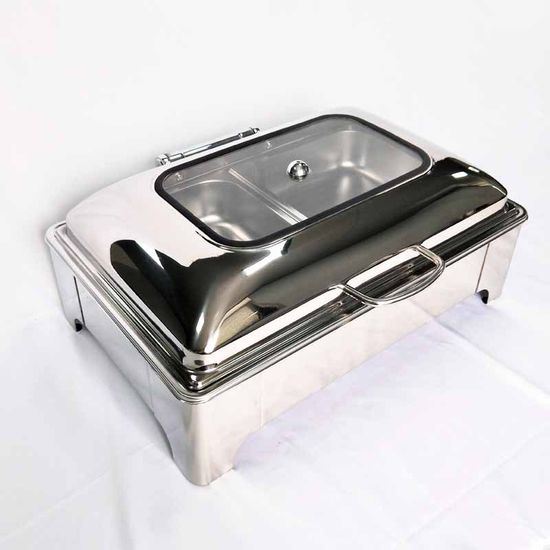


For professional and commercial applications, you should prioritize 304-grade (18/8) stainless steel due to its excellent corrosion resistance and durability. For high-end cutlery or knives, 420 or 440-grade is preferred for its hardness and edge retention. Avoid 201-grade for high-moisture environments as it is more prone to rusting over time.
Products must comply with FDA (U.S.) or LFGB (Germany/EU) food contact safety regulations. Ensure the supplier provides Migration Testing reports to prove that heavy metals like nickel or chromium do not leach into food. Additionally, look for ISO 9001 certification to ensure consistent manufacturing quality management.
Request a pre-shipment inspection focusing on the polishing level (mirror vs. satin) and the smoothness of welded joints. For cookware, check the encapsulated base (aluminum core) for even heat distribution. Ensure there are no burrs or sharp edges on handles, which are critical for user safety and ergonomic handling.
Modular designs allow for efficient space utilization in commercial kitchens and reduce shipping volumes, significantly lowering logistics costs. Stackable items are highly sought after by B2B buyers in the catering and hospitality sectors to optimize storage and inventory management.
Always utilize Trade Assurance services provided by reputable platforms like Made-in-China.com to protect your payment. Furthermore, hire a third-party inspection agency (like SGS or Intertek) to conduct a During Production Check (DUPRO) or a Final Random Inspection to verify the material grade using XRF analyzers before the balance payment is made.
Focus on Total Cost of Ownership (TCO) rather than just the unit price. Negotiate based on raw material price indexes (like the LME nickel price) to ensure fair pricing. If you can commit to annual volume contracts, you can often secure a 5-10% discount or better payment terms (e.g., 30/70 T/T or L/C at sight).
Stainless steel is heavy and prone to denting if not packed correctly. Insist on double-walled corrugated export cartons and individual polybags to prevent surface scratches. For sea freight, ensure the use of desiccants (silica gel) inside the containers to prevent 'container rain' and oxidation during long transit periods across different climate zones.
Check the HS Code (typically 7323.93) against your country's latest customs tariff schedule. Be aware that some regions have anti-dumping duties on specific stainless steel products from certain origins. Work with a professional customs broker to verify if your shipment qualifies for any Free Trade Agreement (FTA) preferential duties by obtaining a Certificate of Origin.