
Satisfies 1 requirement
Mini Fridge with Thermoelectric Cooling 40L for Hotel Room
US$84.00-86.50
200 Pieces(MOQ)

I have found results from5000+products and2000+suppliers aboutThermoelectric cooling
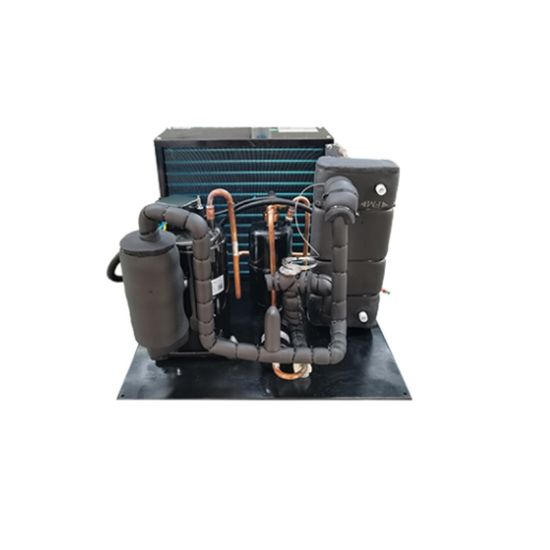


Selecting a TEC module requires a precise calculation of the Heat Pumping Capacity (Qmax) and the Maximum Temperature Differential (Delta T max). For industrial use, prioritize modules with high-density ceramic plates (Alumina or Aluminum Nitride) to ensure superior thermal conductivity and mechanical strength. Always verify the Imax (Maximum Current) and Vmax (Maximum Voltage) to ensure compatibility with your power supply units, and look for RTV silicone sealing options to prevent moisture ingress and internal corrosion.
A high-performance Peltier cooler should demonstrate a Coefficient of Performance (COP) that aligns with your energy efficiency targets. Key benchmarks include thermal cycling stability (the ability to withstand thousands of on/off cycles without resistance increase) and flatness/parallelism tolerances of ±0.02mm to ensure optimal contact with heat sinks. For precision cooling, ensure the supplier provides AC Resistance (ACR) testing reports as a primary indicator of internal semiconductor integrity.
Since TEC modules are electronic components, they must strictly adhere to RoHS (Restriction of Hazardous Substances) and REACH regulations to ensure they are free from lead and other toxic materials. For complete cooling systems (like wine coolers or medical chillers), CE marking for the European market and UL/ETL certification for North America are essential. Additionally, ensure the manufacturer follows ISO 9001:2015 quality management systems to guarantee batch-to-batch consistency.
Thermoelectric cooling is ideal for precision temperature control in medical devices (PCR thermal cyclers), telecommunications (laser diode cooling), and portable refrigeration. However, buyers must be aware of its low energy efficiency compared to compressor-based systems. It is best utilized in applications where compact size, lack of moving parts, and vibration-free operation are more critical than high-volume cooling capacity.
Thermoelectric modules are extremely fragile and sensitive to mechanical shock. To mitigate risk, mandate specialized anti-static and shock-absorbent packaging. Before full payment, hire a third-party inspector to perform a Resistance Test on a random sample from the batch; a significant deviation in internal resistance usually indicates a manufacturing defect or micro-cracks in the bismuth telluride pellets.
Focus your negotiations on long-term reliability and failure rates rather than just the unit price. Request a tiered pricing structure based on annual volume and negotiate for a 12-24 month warranty period. On platforms like Made-in-China.com, look for 'Audited Suppliers' and ask for customized performance curves (Voltage vs. Heat Pumping) to prove their engineering capability, which often leads to better technical support terms.
When shipping complete cooling units, clarify the HS Code (typically 8541.51 for TEC modules) to avoid tariff misclassification. If the system contains heat sinks with fans, ensure the fans meet the energy efficiency standards of the destination country. For shipping to the US or EU, utilize DDP (Delivered Duty Paid) terms if you lack a local customs broker, but ensure the supplier provides a clear breakdown of Import Duties and VAT to avoid hidden costs.
Always use secure payment channels provided by reputable B2B platforms like Made-in-China.com, which offer escrow-like services or trade insurance. Never wire full payments to private bank accounts. Use a 30% deposit and 70% balance payment against the Bill of Lading (B/L) structure, and ensure all technical specifications and 'failure rate thresholds' are explicitly written into the Proforma Invoice (PI).