

Transmission fluid
I have found results from100000+products and60000+suppliers aboutTransmission fluid
Commonly Used:
US$
—
Customization Available
Sample Available
Manufacturer First
Product Attributes:
Type: Engine Oil
Type: Gear Oil
Additives: Antioxidants
Application: Cooling
Base Oil Type: Synthetic Oil
Viscosity Grade: SAE 5W
Additives: Anti-Wear Additives
Additives: Dispersants
Additives: Friction Modifiers
Viscosity Index Improvers
Application: Lubrication
Application: Rust Prevention
Application: Sealing
Application: Shock Absorption
Base Oil Type: Bio-based Oil
Base Oil Type: Mineral Oil
Base Oil Type: Semi-Synthetic Oil
Viscosity Grade: SAE 10W

Satisfies 1 requirement
Premium Synthetic Atf-8 Transmission Fluid for Enhanced Performance
US$3.67-3.74
10 Boxes(MOQ)

Satisfies 1 requirement
Premium Liwald Cvtf Fully Synthetic Automatic Transmission Fluid
US$2.90-3.12
100 Boxes(MOQ)

Satisfies 1 requirement
Premium Liwald Mtf Synthetic Manual Transmission Fluid for Vehicles
US$2.36-2.38
100 piece(MOQ)

Satisfies 1 requirement
Atf-9HP Ester Fully Synthetic Automatic Transmission Fluid
US$1.00-999.00
100 Pieces(MOQ)

Satisfies 1 requirement
Selling Certified Tieyunda Transmission Fluid, Safe, Reliable and Worry-Free to Use.
US$2.30-3.00
200 Pieces(MOQ)

Satisfies 1 requirement
Tieyunda Transmission Fluid with Factory Direct Shifting Smooth and Extended Transmission Life
US$2.30-3.00
200 Pieces(MOQ)
Satisfies 1 requirement
Original Factory Sells High Viscosity Index, Strong Stability Automatic Transmission Fluid
US$2.30-3.00
200 Pieces(MOQ)

Satisfies 1 requirement
High Performance Transmission Fluid, Reducing Wear and Adapting to High-End Models
US$2.30-3.00
200 Pieces(MOQ)

Satisfies 1 requirement
Factory Price Fully Synthetic Multi-Vehicle Automatic Transmission Fluid
US$2.30-3.00
200 Pieces(MOQ)

Satisfies 1 requirement
Universal Transmission Fluid, Good Low-Temperature Flow, Suitable for All Seasons
US$2.30-3.00
200 Pieces(MOQ)

Satisfies 1 requirement
General High Quality 1L/ 4L/ Barrel Atf-3 Automatic Transmission Fluid
US$2.30-3.00
200 Pieces(MOQ)

Satisfies 1 requirement
Factory Price Atf Transmission Fluid Automatic Transmission Fluid
US$2.30-3.00
200 Pieces(MOQ)

Satisfies 1 requirement
High Performance Electric Vehicle Transmission Lubrication Fluid for OEM EV Powertrain Systems
US$3.00-42.00
1,000 L(MOQ)

Satisfies 1 requirement
Advanced E-CVT EV Transmission Fluid for Hybrid Vehicles
US$3.00-3.50
1,000 L(MOQ)

Satisfies 1 requirement
CVT Transmission Fluid Factory Exporter for Global Automotive Market
US$1.00-3.60
1,000 L(MOQ)

Satisfies 1 requirement
OEM Factory CVT Transmission Fluid for Automatic Gearbox Continuous Variable Transmission
US$1.00-3.60
1,000 L(MOQ)


Satisfies 1 requirement
Hfdu Synthetic Fire Resistant Hydraulic Transmission Fluid
US$2.00-5.00
1,000 kg(MOQ)

Satisfies 1 requirement
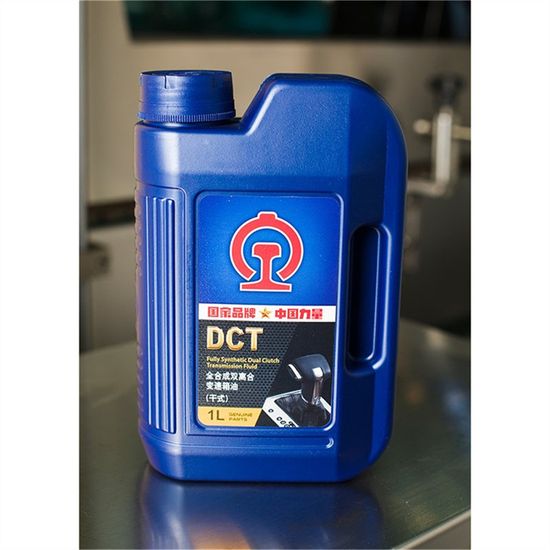
Thermal Stability Dual Clutch Transmission Fluid OEM Custom Transmission Oil
US$1.40-1.80
1 kg(MOQ)

Satisfies 1 requirement
Factory Price High Performance Automatic Transmission Fluid for Gearbox Protection
US$200.00
80 barrel(MOQ)

Satisfies 1 requirement
Atf Transmission Fluid for Automotive Transmission Lubricants
US$1.49-1.50
6,000 Pieces(MOQ)

Satisfies 1 requirement
High Quality Atf Transmission Fluid for Automotive Transmission Lubricants
US$0.80-1.20
100 Pieces(MOQ)

Satisfies 1 requirement
Atf Fully Synthetic Transmission Fluid for Optimal and Provide OEM Service
US$0.80-1.20
100 Pieces(MOQ)

Satisfies 1 requirement
Synthetic Atf Multi-Vehicle Synthetic Atf Multi-Vehicle Transmission Fluid
US$0.80-1.20
100 Pieces(MOQ)

Satisfies 1 requirement
Factory Supply 6 7 8 Speed Auto Transmission Fluid 1L - High Quality Lubricant
US$0.80-1.20
100 Pieces(MOQ)

Satisfies 1 requirement
High-Quality OEM MB 236.17 SAE Atf Automatic Transmission Fluid
US$1.40-1.70
1,200 Pieces(MOQ)


Satisfies 1 requirement
Axle 7 80W-90 Mineral Gear Transmission Fluid - 1 Liter
US$1.40-1.70
1,200 Pieces(MOQ)

Satisfies 1 requirement
High-Quality OEM MB 236.17 D971 SAE Atf Automatic Transmission Fluid
US$1.40-1.70
1,200 Pieces(MOQ)
Sourcing guidance for Transmission Fluid
What are the key technical specifications to consider when sourcing transmission fluid for B2B applications?
Buyers must prioritize Viscosity Index (VI) and Oxidation Stability. High-quality fluids should maintain a stable viscosity across a wide temperature range to ensure smooth shifting. Look for products that meet or exceed OEM specifications (such as Dexron VI, Mercon V, or specialized CVT/DCT fluids). Additionally, verify the Anti-Wear (AW) additive package and Friction Modifiers, which are critical for preventing metal-to-metal contact and ensuring the longevity of the transmission system.
How can I ensure the transmission fluid meets international quality and compliance standards?
It is essential to verify that the manufacturer is ISO 9001 certified for quality management. For the product itself, look for certifications from the American Petroleum Institute (API) or the Society of Automotive Engineers (SAE). If you are importing into the EU, ensure compliance with REACH regulations. Always request a Technical Data Sheet (TDS) and a Safety Data Sheet (SDS) to confirm the chemical composition and safety handling protocols.
What are the differences between synthetic, semi-synthetic, and mineral transmission fluids in terms of procurement strategy?
Full Synthetic fluids offer the best performance, longer drain intervals, and better resistance to heat, making them ideal for high-end machinery or modern vehicles, though they have a higher unit cost. Mineral fluids are more economical but require more frequent replacement and are generally suited for older equipment. For bulk B2B sourcing, Semi-synthetic options often provide the best balance between cost-efficiency and performance for general fleet maintenance.
What usage scenarios should dictate the choice of transmission fluid?
The choice depends heavily on the application environment. For heavy-duty industrial machinery or commercial trucking, fluids with enhanced thermal stability and heavy-load carrying capacity are required. For passenger vehicle fleets, compatibility with Automatic (ATF), Continuously Variable (CVT), or Dual-Clutch (DCT) transmissions is the primary factor. Always align the fluid type with the specific gearbox technology to avoid catastrophic mechanical failure.
Cross-Border Purchasing Considerations for Transmission Fluid
What are the primary risks when importing chemical products like transmission fluid?
The main risks include leakage during transit and customs seizure due to improper labeling. Transmission fluid is classified as a chemical; therefore, you must ensure the packaging meets UN-certified standards for liquid transport. Furthermore, ensure the Harmonized System (HS) Code (typically under Chapter 27 or 38) is accurately declared to avoid heavy fines or shipment delays.
How should I negotiate with suppliers on Made-in-China.com to ensure transaction security?
Utilize the Secured Trading Service provided by Made-in-China.com to protect your payment until the goods are verified. When negotiating, request a pre-shipment inspection by a third party like SGS or Intertek to test the fluid's chemical properties against the agreed sample. Clearly define the Incoterms (e.g., FOB or CIF) in the contract to establish who bears the risk during the maritime leg of the journey.
What logistics and shipping methods are recommended for bulk liquid lubricants?
For large volumes, Flexitanks or ISO Tanks are the most cost-effective methods for sea freight, as they maximize volume and reduce handling risks. For smaller wholesale batches, 200L drums or IBC totes are standard. Ensure the shipping agent is experienced in handling non-hazardous or hazardous chemicals (depending on the flashpoint) and provides all necessary IMO Dangerous Goods Declarations if applicable.
How can I verify the reliability of a transmission fluid supplier?
Focus on Audited Suppliers on Made-in-China.com who have undergone on-site factory inspections. Check their export history to your specific region to ensure they understand your local import regulations. Requesting a factory video audit and checking their R&D capabilities (such as an in-house testing lab) can further validate their ability to maintain consistent batch quality.