
Satisfies 1 requirement
Low Temperature Rise Ei Power Supply Transformer with ISO9001 Certification
US$1.00
1 Piece(MOQ)

I have found results from60000+products and10000+suppliers aboutEi transformer


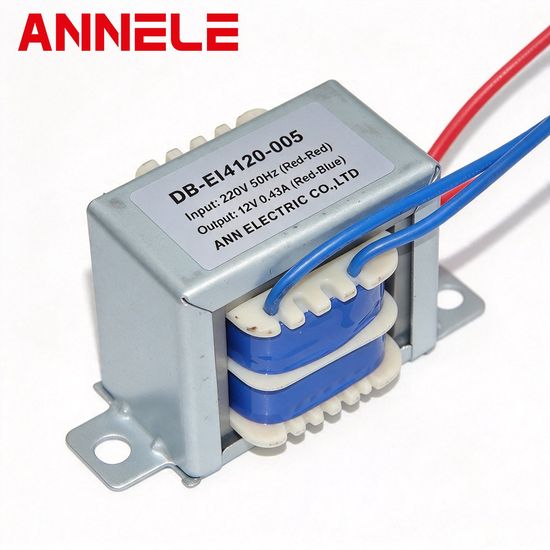


Selecting an Ei Transformer requires a deep dive into core materials and thermal management. You must prioritize Silicon Steel Sheet quality (H18 or H50 grades) to minimize core loss. Ensure the winding material is 100% pure copper rather than copper-clad aluminum (CCA) to maintain high conductivity and prevent overheating. For industrial stability, verify that the insulation class is at least Class B (130°C) or Class F (155°C) to handle voltage fluctuations without breakdown.
Buyers must ensure products comply with IEC 61558-1 for safety and CE, UL, or RoHS certifications for international market entry. Key specs include No-load loss (W), Voltage Regulation Rate (<10% is ideal), and Dielectric Strength (typically 3500V AC/min). Always request a Type Test Report to confirm the transformer can withstand short-circuit conditions and surge voltages common in cross-border power grids.
Focus on the Total Cost of Ownership (TCO) by calculating energy efficiency; a high-efficiency transformer reduces long-term operational costs. Look for vacuum-impregnated (varnished) coils which provide superior moisture resistance and mechanical strength, extending the lifespan to over 10-15 years. For bulk orders, aim for tiered pricing where volumes over 500 units should yield a 15-20% discount compared to sample prices.
Ei Transformers are the backbone of Audio Equipment (due to low electromagnetic interference), Industrial Control Panels, Medical Devices, and Household Appliance PCBA boards. Their linear characteristics make them ideal for precision power supplies where switching noise from electronic transformers must be avoided.
The biggest risks are weight-related shipping costs and damage during transit. Because Ei Transformers are heavy due to their iron cores, sea freight is the most economical option for bulk orders. To prevent damage, insist on palletized packaging with moisture-proof vacuum sealing and reinforced corner protectors to prevent the heavy cores from shifting and breaking the plastic bobbins.
When using Made-in-China.com, leverage the Audit Reports to verify the manufacturer's actual production capacity. Negotiate based on technical transparency—ask for the specific brand of silicon steel used. Request a Golden Sample before mass production and stipulate that the mass-produced goods must match the weight and efficiency benchmarks of the sample within a 3% tolerance.
Always utilize Secured Trading Services provided by the platform to ensure payment is only released upon proof of shipment. For large-scale industrial orders, consider a third-party pre-shipment inspection (PSI) to verify the winding turns and insulation resistance before the balance payment is made. This prevents the risk of receiving sub-standard 'under-powered' transformers.
Ensure the supplier provides a Certificate of Origin to benefit from potential tariff preferences under trade agreements. Since transformers contain copper and steel, they may be subject to anti-dumping duties in certain regions; always check your local HS Code (typically 850431) regulations. For shipping to the US or EU, ensure the wood packaging is ISPM 15 compliant (fumigated) to avoid customs delays.