Satisfies 1 requirement
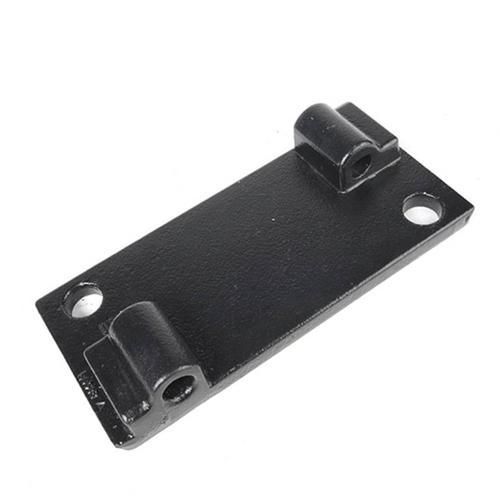
Customized Rail Pad Track Plates Fastener Railway Tie Plate
US$15.00-30.00
20 Bags(MOQ)

I have found results from200000+products and70000+suppliers aboutTrack plate




Buyers must prioritize material grade and heat treatment processes. High-quality track plates are typically made from alloy steel (e.g., 25MnB or 35MnB). Ensure the plates undergo induction hardening to achieve a surface hardness of HRC 42-49 and a core hardness of HRC 32-36. This ensures a balance between wear resistance and impact toughness, preventing cracking under heavy loads.
The choice depends on the terrain: Single Grouser plates provide maximum traction and are ideal for rocky or hard ground; Double/Triple Grouser plates offer lower ground pressure and better maneuverability, suitable for softer soil or mud. For specialized applications like asphalt work, polyurethane-coated or rubber track pads should be selected to prevent surface damage.
Suppliers should ideally hold ISO 9001:2015 certification for quality management. For the products themselves, verify that they meet OEM-equivalent specifications for dimensions (pitch, bolt hole diameter, and grouser height). Request Material Test Reports (MTRs) and Ultrasonic Testing (UT) results to ensure there are no internal defects or casting voids in the steel.
Focus on the Total Cost of Ownership (TCO) rather than just the initial purchase price. A high-quality track plate should offer a service life of 2,000 to 4,000 operating hours depending on the terrain. Calculate the cost-per-hour by dividing the unit price plus shipping by the expected lifespan. Sourcing from Made-in-China.com allows you to compare factory-direct prices, which can be 30-50% lower than local dealership prices for equivalent quality.
The main risks include logistics costs and weight discrepancies. Track plates are extremely heavy; therefore, sea freight (LCL or FCL) is the only viable shipping method. Ensure the supplier provides a detailed packing list with accurate weights to avoid unexpected surcharges at the port of entry. Additionally, verify the anti-rust coating (usually black or yellow paint) is sufficient to prevent corrosion during long maritime transit.
Start by requesting a sample for metallurgical analysis. Once quality is verified, negotiate based on volume tiers. For orders exceeding 500 pieces, you can typically secure a 10-15% discount. Ask for customized branding (casting or stamping) if you are a distributor. Always clarify the Incoterms, preferring FOB (Free On Board) to maintain control over your shipping costs and insurance.
Use Secured Trading Services provided by platforms like Made-in-China.com to protect your funds. Avoid paying the full amount upfront; a standard industry practice is a 30% deposit and 70% balance against the Bill of Lading (B/L) copy. For first-time large orders, consider hiring a third-party inspection agency (like SGS or BV) to perform a pre-shipment inspection to ensure the quantity and quality match the contract.
Check for Anti-Dumping Duties (ADD) which may apply to certain steel castings from China in specific regions. Ensure the supplier provides the correct HS Code (typically 8431.49) to avoid misclassification and fines. For the US market, ensure compliance with ISF (Importer Security Filing) requirements at least 24 hours before the cargo is loaded at the origin port.